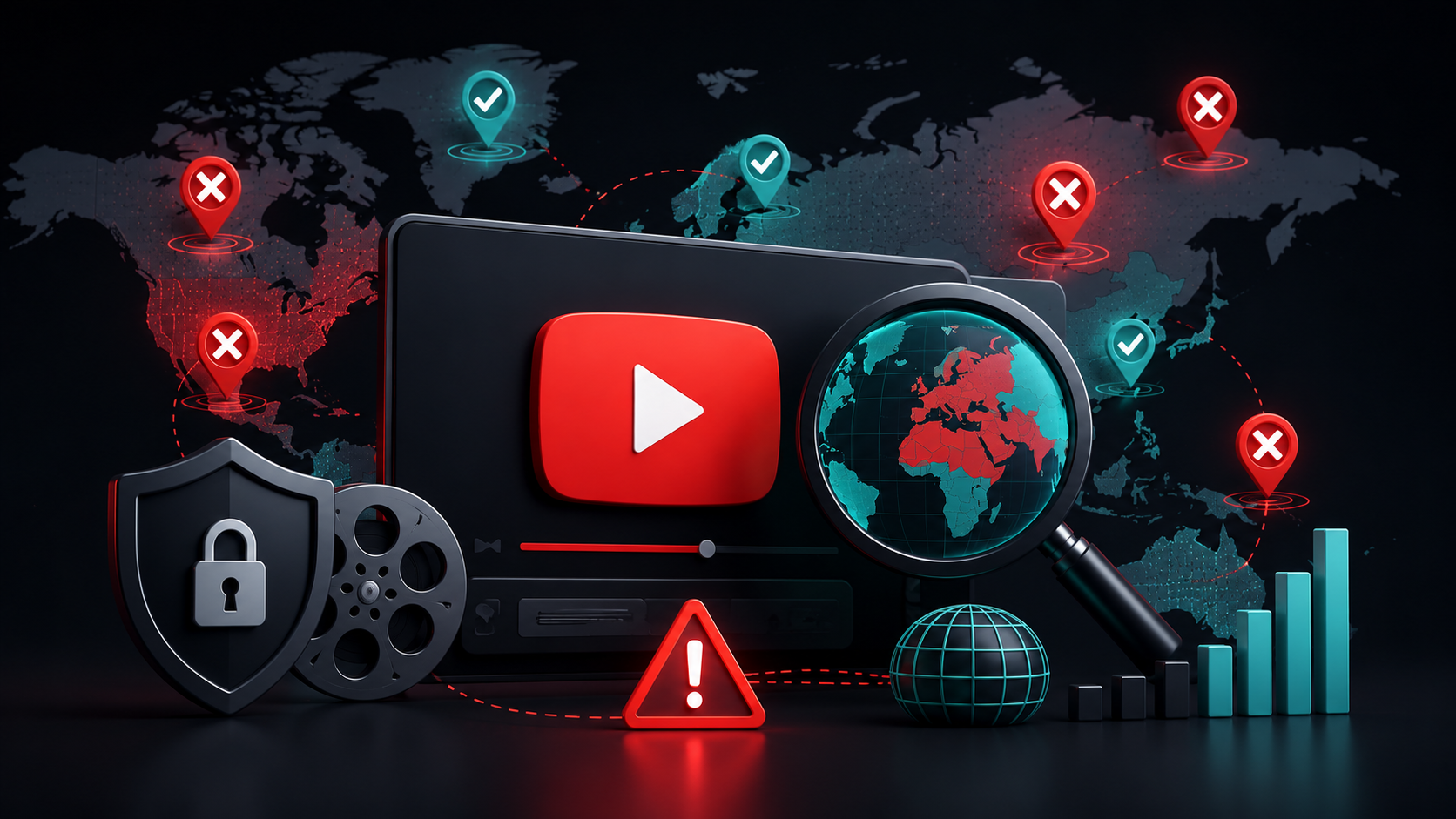
A video can rack up a million views in the United States and still be invisible in Germany, Japan, or Brazil — not because of an algorithm glitch, but because of a licensing restriction the creator never checked. This is the blind spot tripping up channel owners right now: content that looks "viral" on paper while quietly locked out of major markets. It's why interest in a youtube region restriction checker has been climbing steadily among creators who've been burned once and don't want it to happen again.
A youtube region restriction checker refers to a tool that scans a YouTube video and reports which countries can and cannot view it, flagging licensing or copyright-based blocks before they undercut a video's reach. That single sentence explains why the tool category matters more than ever: as music labels, sports leagues, and regional distributors tighten territorial licensing deals, more uploads are landing with invisible geofences attached.
Why Licensing Gaps Matter More in 2026
Global content deals have gotten more fragmented, not less. A background song, a stock clip, or even a brief reaction to licensed footage can trigger automatic territorial blocks that vary by rights holder and region. For a creator chasing international growth, that's a problem hiding in plain sight — a video can perform well in analytics dashboards while being functionally unavailable across large swaths of the audience it was meant to reach. Syndication partners, brand sponsors, and multi-channel networks increasingly expect creators to know this in advance, not discover it after a campaign underperforms.
The catch is that YouTube Studio doesn't make this obvious. Creators typically find out about video blocked countries only when a fan comments "can't watch this in my country," by which point the video's early momentum — the window that matters most for the algorithm — has often already passed.
How Creators Are Getting Ahead of It
This is the gap tools like the YouTube Region Restriction Checker on Vidanalyze (https://vidanalyze.com) are built to close. In practical terms, it lets a creator paste in a video link and get a plain-language breakdown of which regions are restricted and why, so licensing issues can be caught and addressed before a video is pushed hard through promotion, ad spend, or a cross-platform push. For creators managing catalogs with hundreds of uploads, that kind of pre-check is becoming as routine as reviewing thumbnails or titles.
It rarely works in isolation, either. Creators auditing region locks are often the same ones running a video through a Video SEO Analyzer to make sure metadata is optimized for the markets that are available, or using a Channel Growth Analyzer to see whether restricted regions are dragging down overall watch-time trends. Some pair region checks with a Keyword Research Studio pass, on the logic that there's little point optimizing for search terms popular in a country where the video can't even be viewed.
The Road Ahead
None of this suggests creators need to become licensing lawyers. But as territorial content deals keep multiplying, region-restriction checks are shifting from a niche troubleshooting step to a standard part of pre-publish workflow — closer to a spellcheck than an afterthought. Search interest in tools built around this problem is still modest compared to mainstream SEO tools, but it's climbing, and with relatively little competition for creators trying to establish themselves in the space. Heading into 2026, expect region-restriction visibility to become a default feature creators check for the same way they already check titles, tags, and thumbnails — a quiet but necessary step between uploading and going viral.
TAGS
YouTube SEO, Creator Tools, Analytics, Content Licensing, Region Restrictions, Video Optimization, Channel Growth, Global Audience
Google Preferred Source
Add Vidanalyze to your trusted publications and get our news directly in your Google feed.