A video clears millions of views in a weekend, then the comments fill with the same complaint: viewers in Germany, Japan, and Brazil say they can't watch it. The cause is usually a licensing conflict buried in the music or footage, not a policy strike — which is why more creators now run a YouTube region restriction checker before a video takes off, not after.
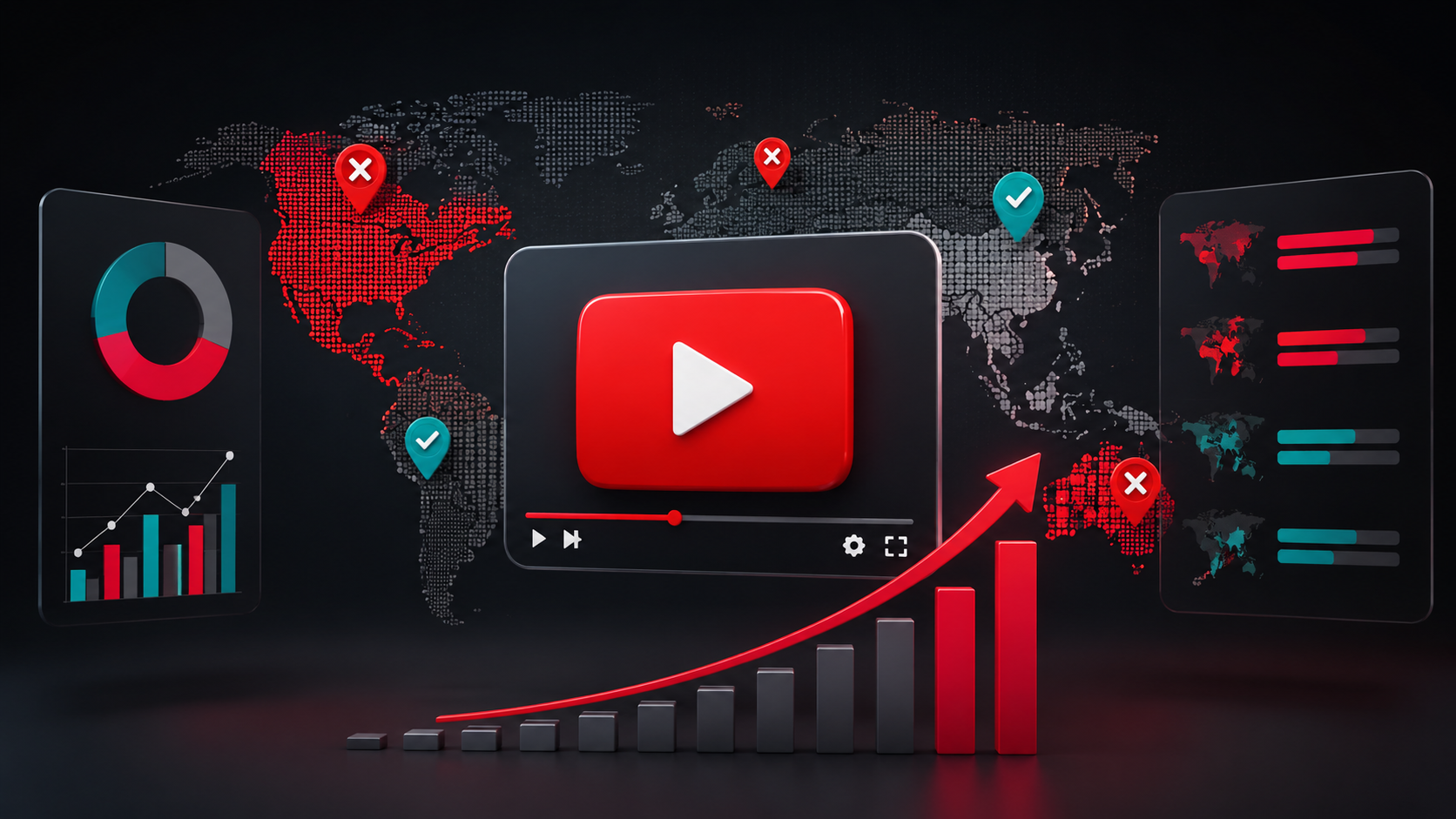
A YouTube region restriction checker refers to a tool that scans a public video and reports which countries can and cannot view it, flagging territory-by-territory blocks tied to licensing, copyright claims, or platform restrictions. For creators used to thinking about audience in terms of subscribers and watch time, it introduces a variable most never had to plan around: geography.
That gap exists because rights enforcement on YouTube runs country by country, not globally. A song, sports clip, news segment, or piece of stock footage can be cleared for use in one territory and restricted in another, depending on who holds distribution rights there.
The result shows up in ordinary uploads more often than creators expect. A reaction video, a highlight compilation, or a vlog with a few seconds of background music from a concert can end up viewable across most of the world — and blocked in a handful of markets that happen to matter most to a channel's growth plans.
Why Video Blocked Countries Catch Creators Off Guard
Most creators discover video blocked countries the hard way: through comments, or a flat line in the geography tab of YouTube Analytics where an active market should be. By then, the video has usually already had its best shot at going viral there, and the moment has passed.
For channel owners, the stakes extend beyond a single upload. A video blocked across several major markets doesn't just lose views in those countries — it can flatten overall watch time and quietly cap ad revenue in regions where a channel had been building an audience. Creators who track channel-level trends with a tool like a Channel Growth Analyzer are increasingly folding region availability into that picture, since a sudden flatline in a previously reliable market can trace back to a licensing block rather than a drop in viewer interest.
Checking Exposure Before Publishing
Instead of waiting for comments or a dip in Analytics to surface the problem, a growing number of creators now check exposure before or right after a video goes live. Tools such as the YouTube Region Restriction Checker on Vidanalyze (https://vidanalyze.com) let a creator enter a video URL and see, market by market, where it's viewable and where it's restricted.
Where the underlying platform data allows, the result can also point to whether a block traces back to a copyright claim, a licensing agreement, or another rights issue — giving a creator something concrete to act on rather than a guess after the fact.
Region data is rarely the only factor behind a video's performance, though. A video blocked in a few markets can still underperform for reasons that have nothing to do with rights, from a weak title to thin metadata that search doesn't reward. That's why some creators pair a region check with tools like Vidanalyze's Video SEO Analyzer, or run a Viral Score Calculator that weighs regional availability alongside watch-time patterns and topic timing before a bigger push — treating geography as one input among several, rather than an afterthought.
None of this requires a legal team. It requires knowing, before a video is scheduled or promoted heavily, which audiences can actually see it — information that used to surface only after the fact, if it surfaced at all.
As more creators build for a global audience from the start — licensing music across borders, collaborating internationally, or reacting to content with its own rights history — checking exposure before publishing is likely to become as routine as writing a title or picking a thumbnail. Through the rest of 2026, that shift points toward region availability becoming a standard pre-publish check, rather than a surprise creators discover in the comments.
Google Preferred Source
Add Vidanalyze to your trusted publications and get our news directly in your Google feed.